Administrative centre
Daman

Industrial investment and policy for Viksit Bharat 2047. Evidence reviewed as of 1 November 2026; document dates and unresolved gaps remain explicit.
Read or download investor brochure
Daman
Silvassa/DNH and Daman adjoin the Gujarat-Maharashtra manufacturing belt; Diu is geographically separate near Saurashtra.
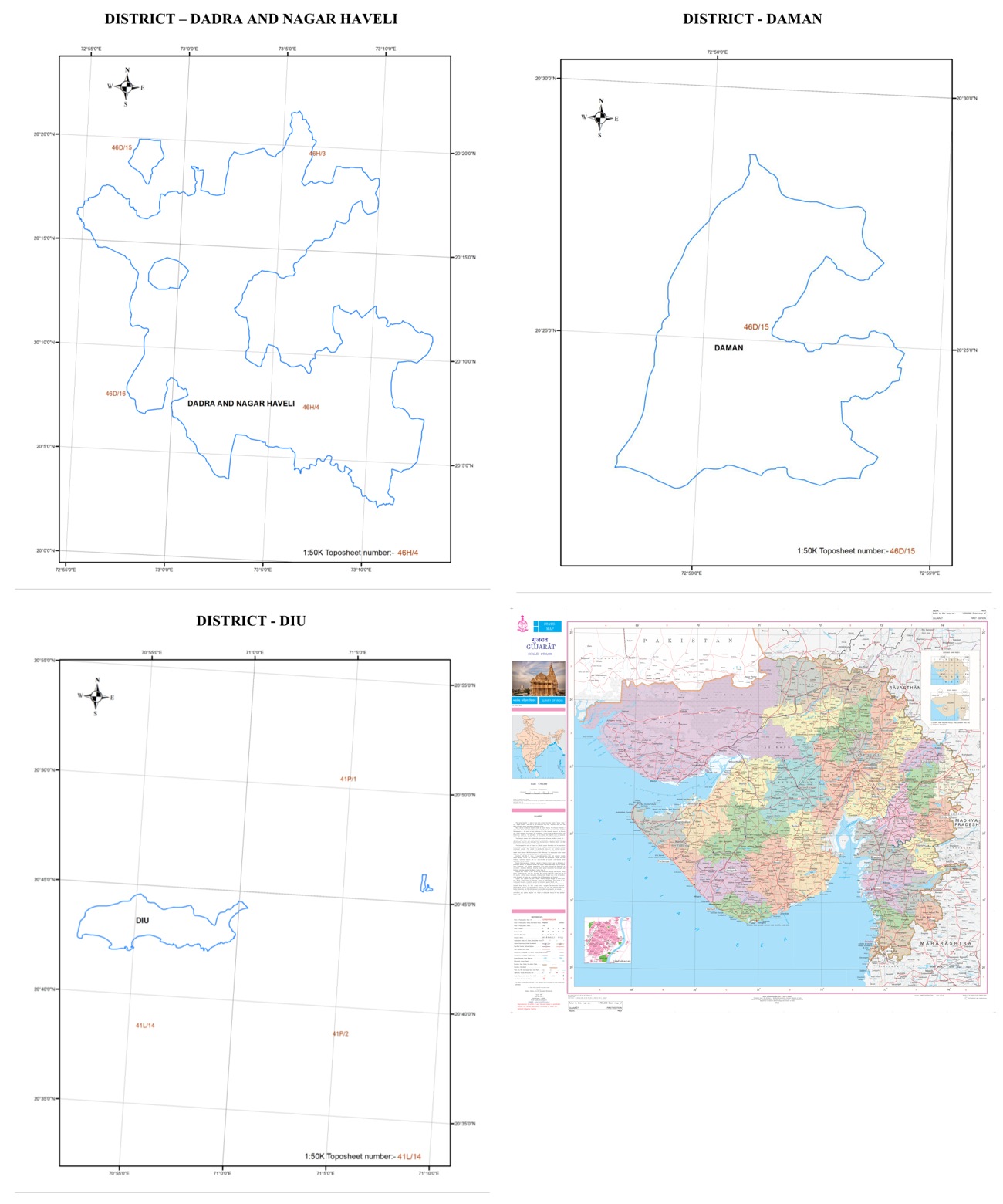
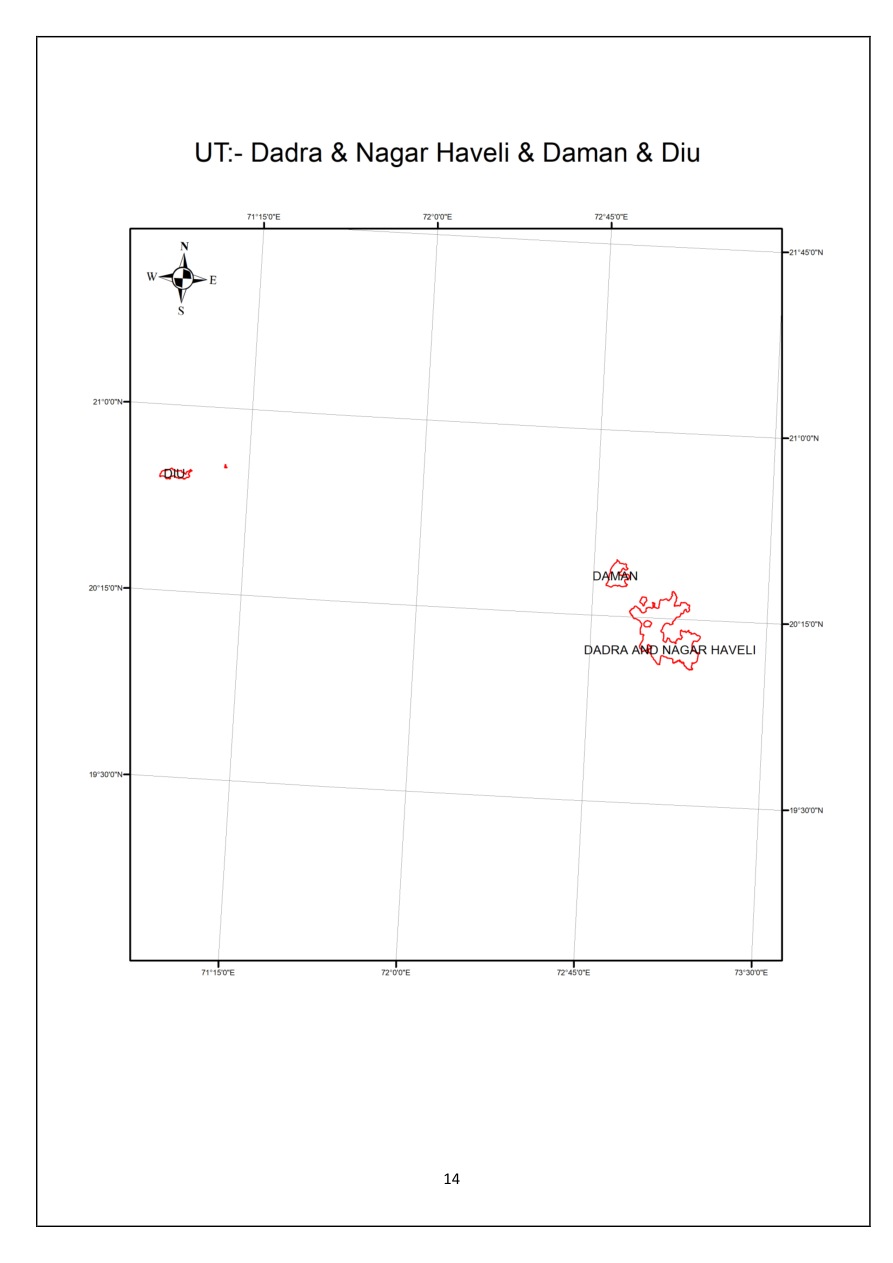
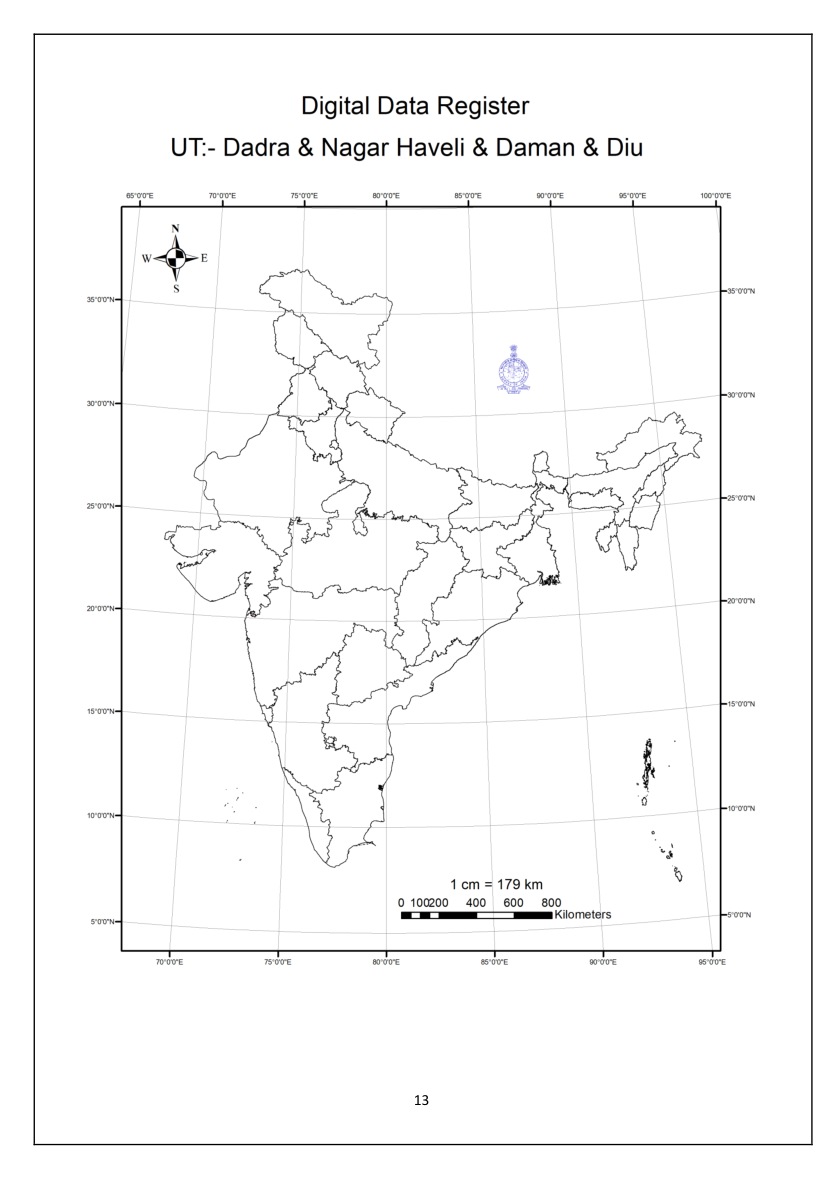
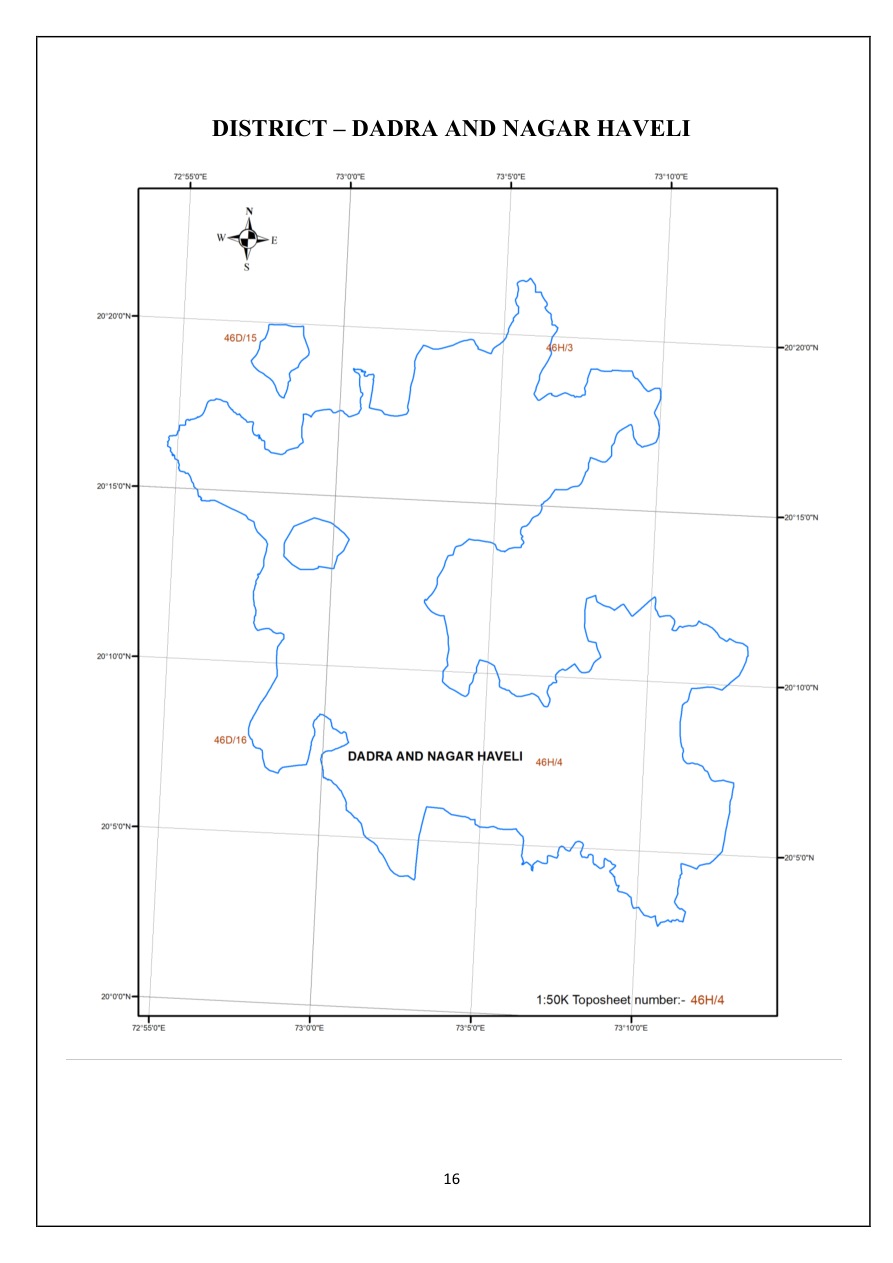
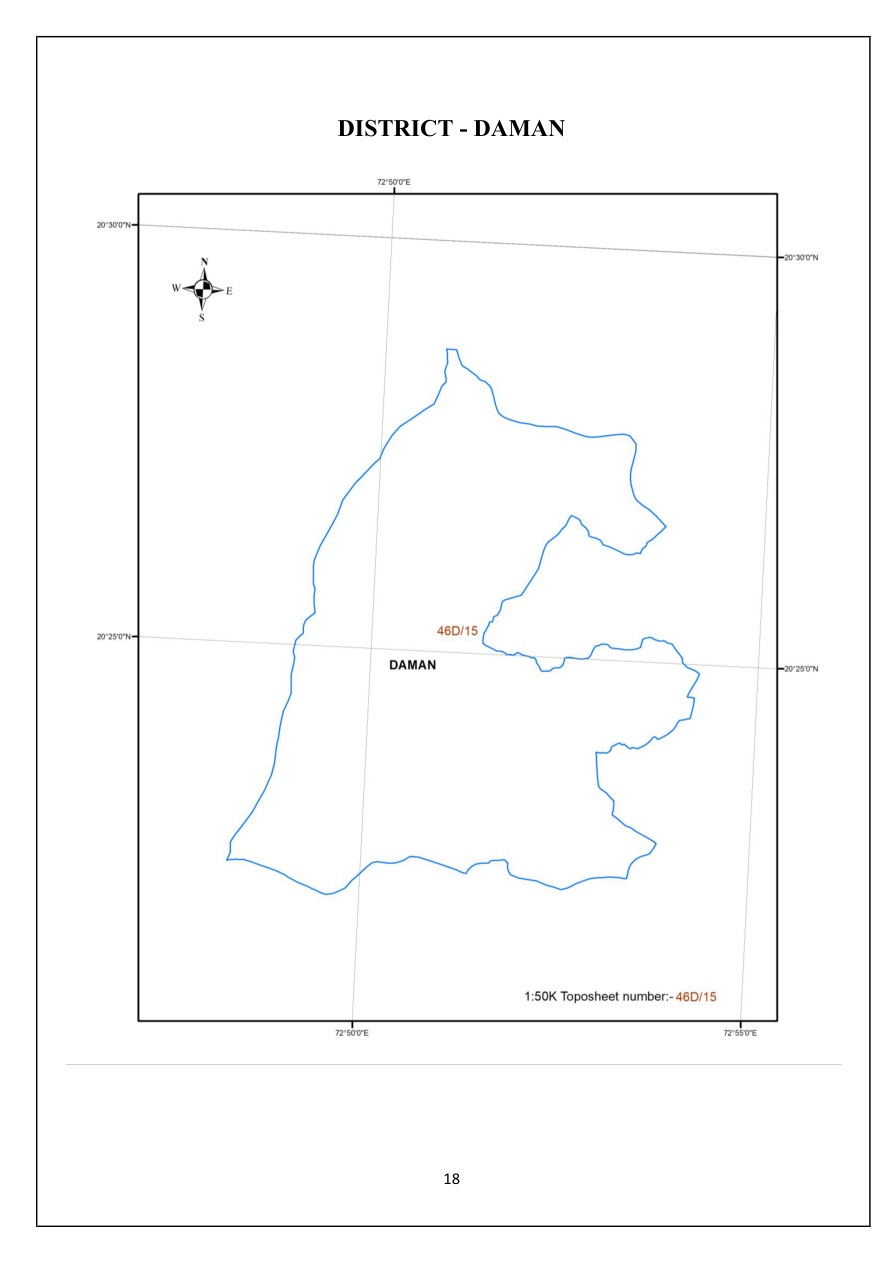
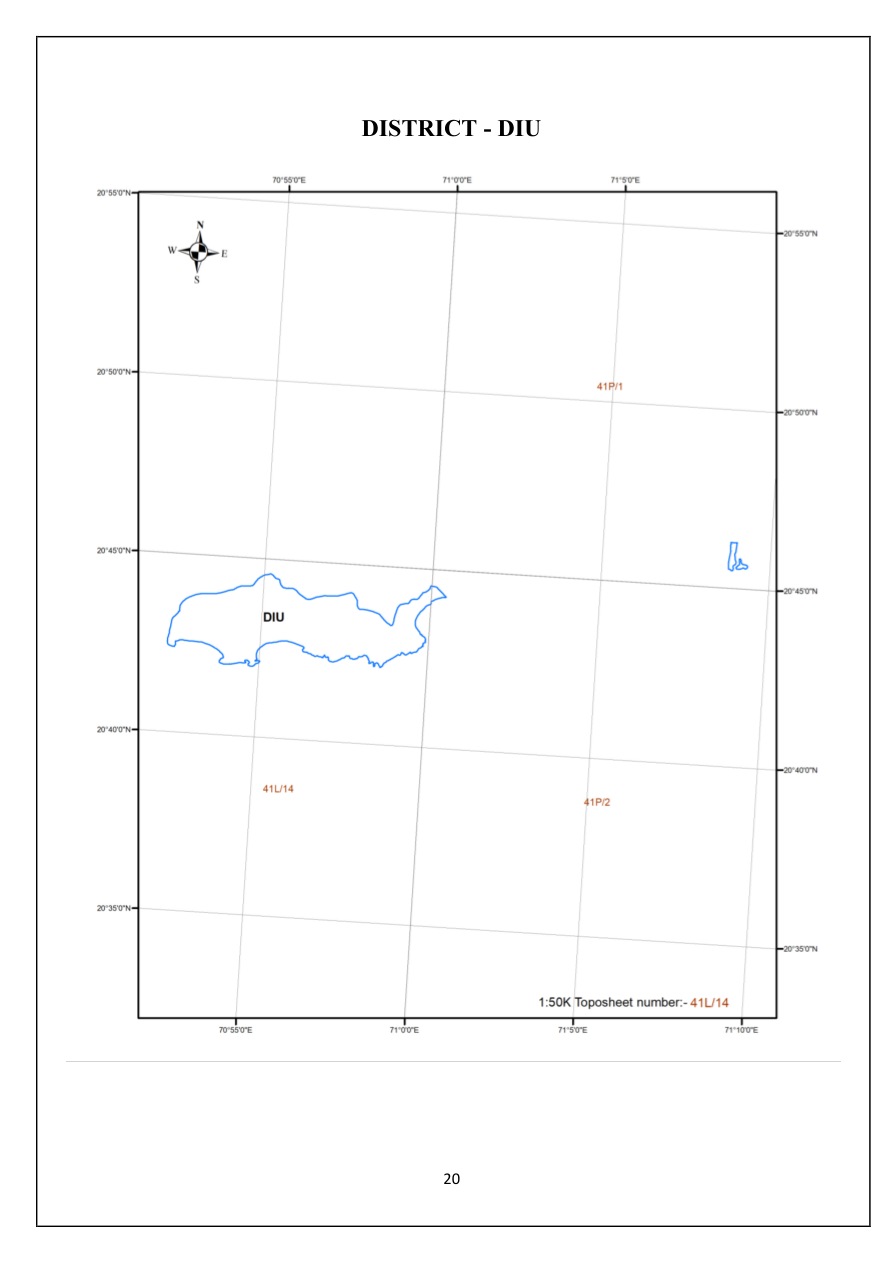
Survey of India Digital Data Register, Edition 1, 2025. No invented/retraced boundaries. DDV03
Evidence. NSWS identifies polyester/cotton yarn and plastics industries.
Commercial case. Specialized conversion and recycling can serve existing producers and buyers.
Exposure. Commodity margins and environmental compliance.
Investment gate. Feedstock/offtake and permitted recycling process.
Evidence. NSWS identifies electrical conductors and pharmaceuticals.
Commercial case. Testing, packaging and precision support can address existing industrial demand.
Exposure. Quality approvals and customer concentration.
Investment gate. Certified quality system and anchor purchase approval.
Evidence. Diu is geographically separate from the Silvassa-Vapi industrial belt.
Commercial case. Local demand supports a different, smaller-footprint proposition than inland bulk manufacturing.
Exposure. Thin volumes and seasonality.
Investment gate. Local market validation, land and coastal permissions.
Assessment. Daman/Silvassa access to NH 48 and Vapi differs fundamentally from Diu routes.
Status. Existing geographical/access context; no current timetable, capacity reservation or service-level guarantee
Assessment. Use nearby Gujarat/Maharashtra terminals subject to actual cargo-service availability; no blanket UT rail-freight promise.
Status. Existing geographical/access context; no current timetable, capacity reservation or service-level guarantee
Assessment. Diu airport access does not establish industrial cargo service for the entire UT.
Status. Existing geographical/access context; no current timetable, capacity reservation or service-level guarantee
Assessment. Compare Gujarat and Mumbai/JNPA gateways for actual cargo; do not assume local port capability.
Status. Existing geographical/access context; no current timetable, capacity reservation or service-level guarantee
Assessment. Vapi-belt suppliers can assess shared freight; Diu requires a separate inbound and outbound model.
Status. Existing geographical/access context; no current timetable, capacity reservation or service-level guarantee
Assessment. Textiles, polymers and pharma require process-specific power, water and effluent verification at the estate.
Status. Existing geographical/access context; no current timetable, capacity reservation or service-level guarantee
Conditions. Land excluded by GFCI definition. Application within one year of first loan disbursement or production, whichever later; loan sanctioned over one year after production disqualifies. Payment after production; combined central/UT capital assistance limited by 35% condition; five-year production continuity/recovery rule.
Window. Principal scheme 20 May 2022-19 May 2027; enterprise-specific vested benefit period may continue beyond scheme period.
Benefits. 15% of gross fixed capital investment capped at₹ 15 lakh micro, ₹ 30 lakh small, ₹ 35 lakh medium; additional₹ 10 lakh if eligible GFCI exceeds₹ 10 crore.
Status. Original policy term verified; application/sanction remains project-specific
Page clause. DDV 01 PDF pp.4-6, 11-12, scheme A.1
Conditions. Minimum five-year gap between establishment of new unit and expansion to avail subsidy at both stages. Expansion balance sheet mandatory; export-doubling checklist requires GSTR 1 s, invoices and monthly comparison. Other scheme terms remain unchanged.
Window. Circular dated 19 August 2026, effective 1 April 2026.
Benefits. Interest subsidy becomes 50% of bank interest rate where bank rate is 10% or less; where bank rate exceeds 10%, subsidy capped at 5%.
Status. Signed circular visually verified, both pages
Page clause. DDV 02 PDF pp.1-2
Benefits. Infrastructure-support route distinct from individual manufacturing-unit claims.
Conditions. Project and applicant eligibility require separate review.
Status. Original preserved; current application/sanction status not assumed.
Page clause. Original identity; clause audit pending
NSWS identifies polyester/cotton yarn and plastics industries.
Daman/Silvassa access to NH 48 and Vapi differs fundamentally from Diu routes.
Commodity-margin exposure
Effluent/recycling compliance
Higher-value conversion
Circular materials services
Market price risk persists.
Residual pollution liability remains.
Constraint. Commodity-margin exposure
Intervention. Move to validated specialty grades and quality assurance
Owner. Manufacturer and customer
Opportunity. Higher-value conversion
Prerequisite. Product qualification and reliable feedstock
Residual risk. Market price risk persists.
Constraint. Effluent/recycling compliance
Intervention. Install traceable recovery and permitted treatment
Owner. Investor and licensed operator
Opportunity. Circular materials services
Prerequisite. Consent and verified disposal chain
Residual risk. Residual pollution liability remains.
Constraint. Diu remoteness from main industrial belt
Intervention. Select local-market, low-footprint operations
Owner. Investor
Opportunity. Localized food and repair businesses
Prerequisite. Conservative volume test and transport quote
Residual risk. Scale limitations remain.
For a real claim, reconcile exact 35% combined-capital-subsidy base wording with sanction authority rather than simplifying it to all project cost.
Official area series differ; precision area comparisons are withheld. See the verification note and original map.
Central policy, FDI, tax, customs, environment, workforce and remittance guide · Single canonical evidence repository
STARTUP POLICY · CHECKED 4 NOVEMBER 2026
The official DPIIT directory describes the UT startup policy as being conceptualised. No operative dedicated startup policy was located in the official-source review.