AKHB & Associates

INVESTOR EDITION · 1 NOVEMBER 2026

Invest in Bihar

Build around agricultural supply, Bhagalpur textile skills and selective Patna service delivery. Price the inland gateway leg explicitly; stage Gaya–Dobhi supplier capacity against delivered plots, utilities and anchor demand.

StateEvidence-led industrial screening
Download investor brochureShared India-entry and legal framework

Read the geography before the incentive

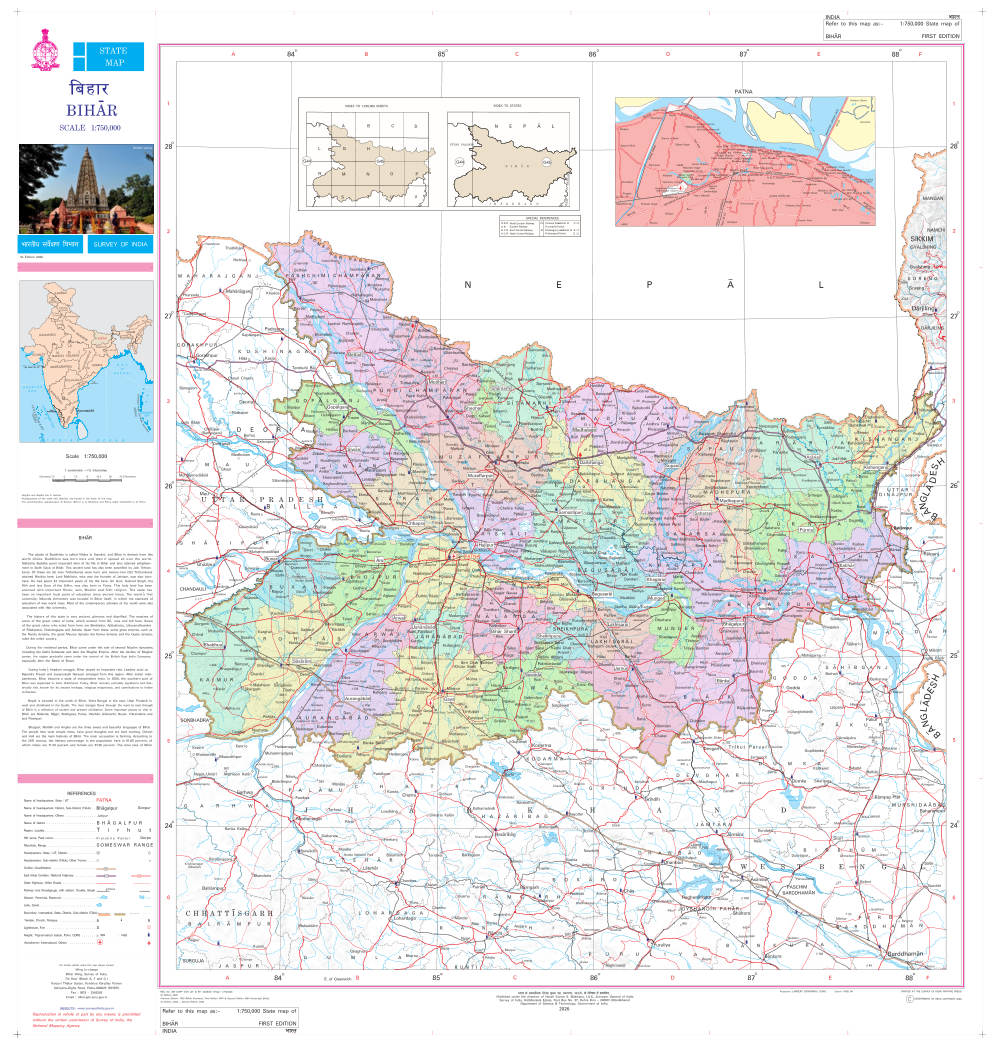
Official Bihar geography and neighbouring jurisdictions
Official geography map; original boundary annotations and attribution retained. Full-resolution original in the repository. BRMAP

Capital / areaPatna | 94,163 sq km BR1

NeighboursNepal (north); West Bengal (east); Jharkhand (south); Uttar Pradesh (west). Landlocked. BR1 · BRMAP

Geographic investment lensEastern Indo-Gangetic plains; proximity to eastern/northern markets. Ocean freight requires an inland leg to ports such as Kolkata/Haldia. BR1 · BRMAP

Economy: estimate, not outturnFY 2025–26 current-price GSDP projected at ₹ 11.07 trillion in the April 2026 profile; latest outturn not verified. BR1

Workforce evidence26,929 weavers: 4th Handloom Census 2018-19 quoted in 2022 textile policy. Historical sector baseline, not current labour availability. BR3

Specific industries and locations to investigate

AKHB commercial analysis. These opportunities identify testable buyer and supply-chain propositions; they are not commitments from customers or an assertion of vacant serviced land.

Food processing and cold-chain aggregation

Evidence. Agricultural and food/dairy base identified by IBEF.

Commercial reasoning. Locate procurement and first-stage processing close to supply; test value-added foods and cold storage against contracted demand.

Exposure. Seasonality, fragmented procurement, food safety, cold-chain loss and inland freight.

Before investment. Proceed only after monthly feedstock mapping, buyer specifications, tested unit yields and reefer quotations.

BR1

Apparel, silk finishing and light footwear

Evidence. Textile 2022 policy identifies Bhagalpur silk and existing weavers; distinguishes garmenting from wet processing.

Commercial reasoning. Buyer-led stitching/finishing can exploit craft skills without assuming a complete integrated textile supply chain.

Exposure. Training/quality ramp-up, imported inputs, welfare compliance; wet-processing needs effluent capacity.

Before investment. Shortlist Bhagalpur for silk ecosystem and industrial premises with utilities; obtain buyer trial orders and labour productivity samples.

BR3

Phased engineering and building-material supply

Evidence. NICDC Gaya IMC near Dobhi: 1,670 acres, NH 19/NH 22 and proximity to Jharkhand; officially described as planned.

Commercial reasoning. Evaluate mineral-linked inputs and regional construction demand; phase capex against delivered infrastructure.

Exposure. Land/service delivery milestones and evacuation freight; proposed cluster is not proof of ready serviced plots.

Before investment. Hold construction commitment until plot allotment, utility commissioning and access-road completion are documented.

BR2

Patna-based IT/ITeS and selective GCC functions

Evidence. Bihar government lists IT 2024 and GCC 2026 policy originals.

Commercial reasoning. Pilot back-office/technology delivery where recruitment and service-level performance can be tested before scaling.

Exposure. No demonstrated headcount pipeline or operating GCC economics established in this review; AI policy full text unlocated.

Before investment. Begin with a hiring/retention pilot, dual connectivity and customer contracts; model zero subsidy until eligibility approved.

BR4 · BR5

Location and asset readiness

Gaya / Dobhi IMC

Readiness. Planned; environmental clearance reported by NICDC. Not verified as ready serviced land.

Fit. NICDC distances:NH 19 10 km; NH 22 2 km; Gaya airport 30 km; Gaya Junction 40 km; New Paharpur EDFC 45 km; Haldia 550 km. These are published proximity figures, not freight transit guarantees.

BR2

Bhagalpur

Readiness. Existing craft/production ecosystem; current available premises unverified.

Fit. Silk/garment niche screening; inspect labour skills, finishing, quality and effluent facilities.

BR3

Patna metropolitan area

Readiness. Existing capital-city location; project utility/office availability not verified.

Fit. IT/ITeS pilot and market-serving distribution screening.

BR1 · BR4

Bring inputs in. Deliver finished goods out.

Road / river crossings

Route / node. Mokama-Aunta-Simaria-Begusarai; Dobhi NH 19/NH 22

Asset / service status. Aunta-Simaria dedicated August 2025; Gaya IMC remains planned

Industrial use. Compare north/south Bihar procurement and distribution; Gaya/Dobhi engineering and building-material supplier screening.

Inbound. Raw materials, packaging, machinery and local agricultural inputs by road.

Outbound. Finished goods to regional buyers; drayage to rail, water and seaport gateways.

Booking / site test. Plot-to-highway access, truck loading restrictions, all-season approach, bridge/axle limits, tolls, backhaul and delivered quotation.

BC1 · BC2

Rail / inland terminals

Route / node. Sonnagar EDFC; Gaya conventional railway; Fatuha MMLP / Patna ICD identified by NICDC

Asset / service status. EDFC operational to Sonnagar; terminal-specific service and customs status not verified

Industrial use. Aggregate nonurgent containerised or bulk consignments where volume justifies handling and inventory.

Inbound. Machinery/components or bulk raw materials subject to loading/rake service availability.

Outbound. Domestic northern markets or port-bound conventional-rail connections; no assertion of continuous dedicated line to Kolkata.

Booking / site test. Written terminal acceptance, train frequency, rake/container availability, first/last mile, free-time/demurrage and customs authority where export/import proposed.

BC2 · BC3

Inland water / outbound sea gateway

Route / node. Kalughat-Saran on NW 1; Gaighat-Patna; downstream Kolkata/Haldia

Asset / service status. Kalughat inaugurated and handed to operator; Haldia cargo commencement established; regular service quote unverified

Industrial use. Container aggregation and low urgency replenishment; assess suitable cargo with actual operator, not generic cheapest-mode promise.

Inbound. Port-origin containers/components to northern Bihar or Nepal hinterland, then road distribution.

Outbound. Aggregated export/domestic container cargo to downstream gateway if booked service and maritime connection align.

Booking / site test. Container/cargo acceptance, LAD and draft, sailing window, vessel/yard capacity, transshipment charges, port cut-offs, damage insurance and return loads.

BC4 · BC5 · BC6 · BC7

Air / people and time-critical cargo

Route / node. Patna, Gaya, Darbhanga; Purnea passenger terminal; Bihta development

Asset / service status. Airport/cargo functions differ; Bihta foundation-stage evidence only

Industrial use. Management/customer travel; high-value samples, urgent spares and qualifying perishables where airline acceptance and economics work.

Inbound. Urgent parts or samples via accepted domestic hub connection.

Outbound. Domestic air cargo / onward gateway only after booking; do not portray international flight label as routine international cargo capability.

Booking / site test. Current airline timetable, destination and belly capacity, cut-off, dimensions/dangerous-goods acceptance, cold room, screening and customs/plant quarantine for proposed shipment.

BC8 · BC9

Land-border exports

Route / node. Raxaul; Jogbani

Asset / service status. Operating LPAI ports; cargo-specific clearance and capacity remain project tests

Industrial use. Nepal-focused food, industrial inputs, packaging and machinery distribution only with actual buyers and trade compliance.

Inbound. Approved raw materials/inputs across border if product origin and tariff treatment support case.

Outbound. Industrial goods to Nepal via contracted buyers and authorised customs route.

Booking / site test. Importer credentials, HS classification, origin rules, SPS/quarantine, truck interchange/parking, border dwell, warehouse/cold-chain acceptance and settlement risk.

BC10 · BC11

Read each benefit with its conditions

BIIPP 2025 — select one route

Review status. Original clauses verified; current-version conditions remain unresolved.

Terms. The original capital route gives 30% only to large high-priority units; other categories, regions and ceilings differ. The 300% net-SGST ceiling over 14 years applies to super-mega Region A projects. Capital, special net-SGST and interest-linked routes are alternatives, not three cumulative awards.

Conditions. Original category table: large above ₹ 50 crore to ₹ 200 crore; mega above ₹ 200 crore to ₹ 500 crore; super-mega above ₹ 500 crore. The narrative differs at exactly ₹ 200 crore; seek clarification. Admitted net state GST after input credits, production tests, instalments and caps control cash receipts.

Window / version. Signed extension: until 31 December 2026 or commencement of the successor 2026 policy, whichever is earlier. May 2026 amendment missing; successor commencement not independently ruled out.

Verified location. Original PDF pp.4–9; extension p.1 §3.

BRV1 · BRV1E

BIADA land and post-allotment framework

Review status. Original 2026 clauses verified; later amendments not exhaustively audited

Terms. EMD 2% land lease premium micro/small; 5% medium/large. Bihar-registered startups may be exempt. Balance instalments carry 9% simple annual interest. Default: 12% annually on defaulted amount for period of default. Production/operations from possession: 18/24/30/36 months micro/small/medium/large. Complete defect-free specified post-allotment applications: 30 working days deemed approval, subject to exclusions.

Conditions. Do not add 9%+12%; clause 19.2 does not expressly say additive. Default can lead to cancellation. Upfront payment within 30 days of allotment letter after EMD adjustment, with taxes. Lease 30/60/90 years as-is-where-is and allotment-specific. Deemed approval limited to ScheduleIV: not fresh land allotment; ownership/control transfer; mandatory mortgage NOC; Red/Orange pollution approvals; cancellation/restoration/resumption; title/encroachment/litigation; statutory approvals outside BIADA competence. Transfer/NOC delay triggers Board placement, not automatic clearance. Fire/environment/building and other statutory compliance remains.

Verified location. PDF 15 printed 13 §§12.2–12.3 PDF 17 §§17.1,18.1 PDF 18 printed 16 §§19.1–19.2 PDF 21 printed 19 §§23.3,24.1–24.4 PDF 22 printed 20 §§26.1–26.2

BRV2

Sector routes and supplier ecosystem

Review status. Detailed terms, caps, source pages and gaps are in the linked Bihar policy companion.

Terms. Textiles: original 2022 capital, power, employment and freight clauses remain version-sensitive. IT 2024: original 25% annual energy-bill support and employer EPF/ESI support capped at ₹ 5,000 per employee/month, for five years, apply only to qualifying units.

Conditions. IT sanction and current instructions remain necessary. Tourism uses capital OR interest support. Startup seed support is a repayable ten-year interest-free loan. Udyami is a beneficiary-restricted local entrepreneur route, not a blanket FDI benefit. GCC 2026 has a separate eligibility test.

BRV3 · BRV4 · BRV5 · BRV6 · BR3 · BR5

Ease of Doing Business / optional CIPA

Review status. Key Act and notification clauses checked; complete later-rule and portal-operation audit not performed.

Terms. CIPA categories carry 5 / 10 / 15 working-day processing periods for prescribed services. The temporary certificate route provides three years to obtain regular approvals as prescribed. Valid registrations can support limited duplicate-licence relief for the same activity and premises.

Conditions. Land, environment, fire, building, labour and safety obligations continue. The 30-day escalation route is not automatic clearance. Confirm service coverage, complete filing, category and portal status; a CIPA is not universal permission to construct or operate.

Verified location. Act PDF pp.30–31,43–44,46,50,61–62; notification 2496 PDF pp.2–3.

BC13 · BC14 · BC15 · BC16

Detailed policy companion PDFRead all policy terms onlineEODB guide · 12 October 2026
View preserved archived guide and correction

What can work—and what still has to change

Strengths

Eastern-market location and agricultural base support procurement-led food businesses.

BR1

Existing textile craft base gives a credible niche rather than a generic all-sector claim.

BR3

Weaknesses

Landlocked location adds an inland export leg; assess delivered cost, not headline land cost.

BR1 · BR2

Textile policy itself identifies fragmented value chains and power-cost concerns; these 2022 observations require current site quotes.

BR3

Opportunities

Gaya corridor development offers a staged entry option if service milestones are achieved.

BR2

Dedicated IT and GCC routes justify selective pilots, subject to real talent and client demand.

BR4 · BR5

Threats

Projected infrastructure/employment must not substitute for commissioned assets or customer demand.

BR2

Successor-policy and incentive-version changes can alter project cash flows.

BR6 · BR7

Multi-client consolidation, packaging, warehousing and return-load services around actual customer flows.

Constraint. Landlocked production creates an inland gateway leg.

Intervention. Consolidate anchor volumes; competitively quote all-road, rail-plus-road and NW 1-plus-road on one delivered-cost basis.

Who acts. Manufacturer procurement/logistics team plus contracted operator.

Commercial opportunity. Multi-client consolidation, packaging, warehousing and return-load services around actual customer flows.

Conditions. Signed minimum volumes and service-level agreement; workable inventory/handling cost.

Remaining risk. Low utilisation or missed vessel/ship connection can eliminate modal savings.

BC2 · BC3 · BC5 · BC7

Scheduled aggregation and inventory-management service for nonurgent goods.

Constraint. Inland-water payload and dispatch reliability depend on channel depth and service availability.

Intervention. Book season-specific draft/dispatch plan, aggregate cargo, carry buffer inventory and keep priced road/rail fallback.

Who acts. Terminal/vessel operator and anchor shippers; IWAI manages navigation information.

Commercial opportunity. Scheduled aggregation and inventory-management service for nonurgent goods.

Conditions. Demonstrated departures and handling/cargo acceptance; no project finance based only on theoretical terminal capacity.

Remaining risk. Waterway seasonality and insufficient backhaul remain.

BC5 · BC6 · BC7

Engineering/fabrication, maintenance, construction inputs and warehousing that scale with verified cluster demand.

Constraint. A new corridor or industrial cluster may precede ready access and utilities.

Intervention. Stage supplier capacity and capex against plot handover, commissioned power/water and completed approaches.

Who acts. Industrial developer/BIADA for infrastructure; investor for staged procurement and contracts.

Commercial opportunity. Engineering/fabrication, maintenance, construction inputs and warehousing that scale with verified cluster demand.

Conditions. Executed customer orders and infrastructure milestones, not employment/investment targets.

Remaining risk. Developer delays and weak anchor demand.

BC1 · BC2

Buyer-led packhouse, testing, reefer transfer and high-value cargo coordination.

Constraint. Passenger airport access does not by itself provide export cold-chain or cargo capacity.

Intervention. Pre-book airline capacity, pre-cool/pack at origin, test temperature log and claim process, compare road-to-gateway fallback.

Who acts. Producer/exporter, approved packhouse, airline/handler and relevant inspecting agencies.

Commercial opportunity. Buyer-led packhouse, testing, reefer transfer and high-value cargo coordination.

Conditions. Product-specific acceptance, shelf life and contracted buyer price support full logistics cost.

Remaining risk. Offload, seasonal air capacity and product rejection.

BC8 · BC9

Compliant Nepal-market distribution, consolidation and inventory positioning.

Constraint. Border trade adds documentation, inspection and dwell-time uncertainty.

Intervention. Use approved broker/forwarder, pre-validate product/origin paperwork and contract border handling with measured pilot loads.

Who acts. Exporter/importer, authorised logistics operator and customs/quarantine authorities.

Commercial opportunity. Compliant Nepal-market distribution, consolidation and inventory positioning.

Conditions. Verified Nepal demand and lawful trade route; no automatic preferential tariff assumption.

Remaining risk. Border disruption, buyer credit and product restrictions.

BC10 · BC11

Evidence to close before an investment decision

Current wage, skill vacancy, industrialwater/power reliability andland-price quotations not independently measured.

Latest textile amendments and possible newIndustrial Policy 2026 successor status require final operative check.

Current Nov 2026 airline schedules, direct destinations, cargo allotments and customs-service acceptance not independently established.

No terminal-specific current Fatuha/Patna ICD service table or customs notification recovered; do not label every listed MMLP an active export-clearance location.

Kalughat regular sailing schedule, cargo acceptance (container-only earlier specification versus broader later release), actual throughput and operator tariff not recovered.

No freight quote, road journey duration, transit guarantee, backhaul rate or industrial-site last-mile survey conducted.

EODB key clauses verified; complete later rule/portal-operation audit not performed.

New 2026 industrial policy commencement not independently ruled out.

₹20000 skills ceiling not revalidated against incorporated 2016 operative rules.

Supporting documents

Search this jurisdiction’s canonical source records and verified notes